
Estimate Follow-Up And Unsold Proposals For Roofing Sales Teams
Most roofing estimates are not accepted on the spot. A simple, respectful follow-up system turns more of them into signed work without pestering anyone, and shows you why the rest were lost.
Why Estimates Go Quiet
A roofing estimate is often the last step before a homeowner decides. After that moment, many companies go silent. The reasons are usually process, not people:
- ✓The estimator is on the next roof and follow-up slips
- ✓There is no agreed cadence, so each rep does something different
- ✓Nobody records why a customer said no or not yet
- ✓Follow-up feels pushy, so it gets avoided
- ✓Estimates live in email and notebooks, not in one place
A written process fixes the first, second, third and fifth. Good wording fixes the fourth.
Five Kinds Of Open Estimate, And What Each Needs
Following up the same way with everyone wastes effort. Tag each estimate with what is holding it up:
| Customer | What is holding them | Your follow-up focus |
|---|---|---|
| Ready, needs a nudge | Busy, lost the email, minor question | A short reminder with a clear next step, such as a start date or a signing link |
| Comparing quotes | Weighing two or three contractors | Make it easy to compare: scope, materials, warranty and timeline in plain terms |
| Waiting on financing or a decision-maker | Needs lender approval or a partner's agreement | Offer to join a call with the other decision-maker; share only financing information you are approved to give |
| Waiting on insurance | Claim in progress or a decision pending | Stay helpful and informative; avoid pressure around coverage decisions |
| Planning for later | Not urgent yet, or budgeting | Agree a date to check back, and keep the quote valid until then |
A Follow-Up Rhythm You Can Adapt
Timing varies by market, job size and customer type. Treat this as a starting point to test, not a rule.
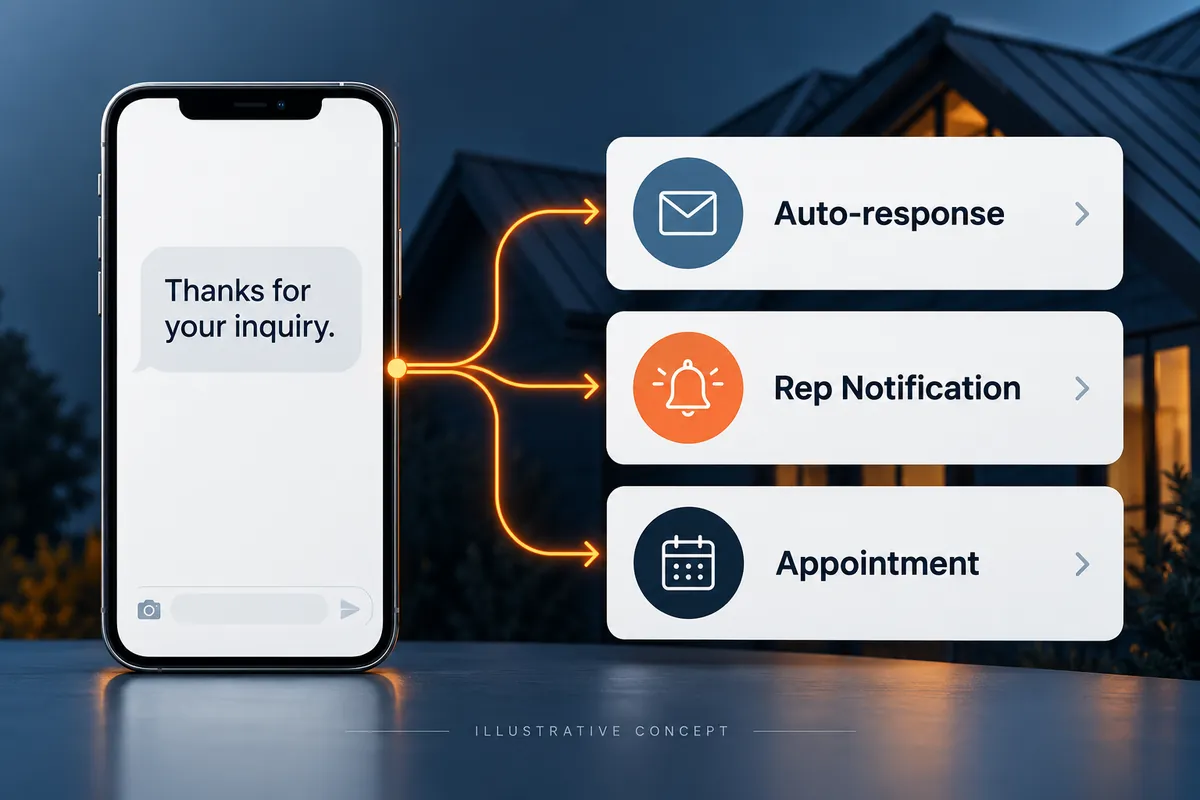
Same day: confirm and thank
Send the estimate promptly with a short message that thanks them, summarizes the scope and says when you will check in.
Within a few days: a helpful check-in
Ask if they have questions. Offer to walk through the scope, materials or warranty by phone.
About a week: address the likely objection
Share what you hear most often: timing, price or comparing quotes. Offer a concrete next step, such as a call or a revised scope.
Later: a respectful last note
Say the quote stays valid for a stated period and that they can reach you any time. Then stop and move them to a long-term list.
Run it automatically
R-ROS can send these reminders and stop them when the customer replies or books.
Text, Email, Phone Or In Person?
Use the channel the customer used with you, and mix them.
| Channel | Works well for | Cautions |
|---|---|---|
| Text message | Quick reminders and scheduling | Needs consent and an easy opt-out; keep it short and personal |
| Sending estimates, scope details, warranty information | Easy to miss; use clear subject lines | |
| Phone call | Questions, objections and hesitant buyers | Call at reasonable hours and respect do-not-call requests |
| In person | Walking the roof again, or a second visit with a decision-maker | Time-consuming; reserve for serious jobs |
Short Messages You Can Adapt
"Hi Marcus, thanks for letting Apex Roofing look at your roof. Your estimate is attached. I will check back in a couple of days, and you can reach me here any time with questions."
"Hi Marcus, did you get a chance to look over the estimate? Happy to go through the scope or materials if that helps."
"Totally fair to compare. If it helps, I can list what is included in ours: materials, warranty and timeline, so it is easy to line up against the others."
Do not criticize competitors; make comparison easy.
"Thanks for being upfront. I can go through where the cost comes from, and we can look at options such as a different material or scope if that fits better."
Do not discount by reflex. Re-scope or explain value first.
"No rush. Would it help if I checked back in October? Your quote stays valid until November 15."
"Would it help if I joined a quick call with your co-owner or spouse to answer questions?"
"Understood. Let me know when you hear back, and I can adjust the scope to match what is approved."
No pressure about coverage decisions.
"Hi Marcus, I will stop reaching out so I do not clutter your inbox. Your quote stays valid until November 15, and you can reach me any time at (555) 234-8910. Thanks for considering us."
Adapt the wording to your voice, and only text people who have agreed to be contacted that way.
Handling The Three Most Common Objections
Most "no" answers come down to price, timing or a competing quote. A calm, specific reply works better than a discount.
Price
Ask what they are comparing. Explain what drives your number: materials, tear-off, ventilation, decking repairs, warranty. Offer scope options rather than a blanket discount.
Timing
Agree a date to check back, keep the quote valid, and tell them what to watch for in the meantime, such as new leaks.
Another quote
Make comparison easy and honest. Offer to review the other quote's scope with them so they compare like with like.
What To Set Up In Your CRM
You do not need complex software, but you do need one place where every estimate lives.
- ✓Pipeline stages: estimate sent, follow-up in progress, decision pending, won, lost, later
- ✓Fields: estimate value, date sent, customer type tag, expected decision date, reason lost
- ✓Tasks: an automatic task for the owner at each follow-up step
- ✓Automation: reminders that stop on a reply, booking, signature or opt-out
- ✓Owner: every open estimate has a named person and a backup
See CRM automation for how we set this up, and attribution for tying outcomes back to marketing.
Consent And Opt-Out Basics
Marketing and follow-up messages are regulated, and the rules vary by state and message type. Some basics most businesses follow:
- ✓Get clear consent before texting, and keep a record of it
- ✓Include an easy way to opt out and honor it right away
- ✓Respect quiet hours and send from a properly registered business number
- ✓Include a working unsubscribe link in marketing emails
- ✓Tell people if calls are recorded where your state requires it
This is general information, not legal advice. Check your own situation with an advisor.
How To Know Follow-Up Is Working
Track a few numbers and review them monthly:
| Measure | Definition |
|---|---|
| Estimate coverage | Share of estimates sent that received at least the first follow-up |
| Time to first follow-up | How long after sending the estimate the first follow-up happened |
| Estimate-to-contract rate | Signed contracts divided by estimates sent, by estimator and by source |
| Reasons lost | Count by reason: price, timing, competitor, insurance, no response |
At a monthly review, look at which reasons are growing, which estimator or source converts best, and which estimates are still open. That is how you improve pricing, scope wording and response speed.
Reviving Estimates From Months Ago
Old estimates are a list you already paid to build. Roofs age, storms happen and plans change. A short note offering a fresh look can reopen conversations:
- ✓Offer to re-check the roof, since its condition may have changed
- ✓Confirm whether the original scope still fits
- ✓Share any seasonal timing that helps scheduling
- ✓Only contact people who agreed to hear from you, and always offer an easy opt-out
See our approach to database reactivation in CRM automation.
Related Guide
Related Guides From The Blog
- The First 24 Hours: A Roofing Lead Follow-Up SequenceA practical roofing lead follow-up sequence for the first 24 hours: call timing, text and email messages, voicemail scripts, scheduling steps, CRM stages and common mistakes, with example messages.
- What Counts as a Roofing Lead? Inquiry, Accepted Lead, Inspection and ContractA four-stage definition of a roofing lead: inquiry, accepted lead, booked inspection and signed contract, why each matters, how to record them in a CRM and how to use the definitions in reports and agency agreements.
Frequently Asked Questions
How many follow-ups are too many?
There is no fixed number. Stop when the customer says no, books, or opts out, and keep each message useful rather than repeating the same ask.
Is automated texting allowed?
Texting generally requires consent and an easy way to opt out, and rules vary. We help set up consent language and opt-out handling. Check with your own advisor for your situation.
Should the estimator or the office follow up?
Either can, as long as one person owns each estimate and the process is written down.
Does this work for insurance jobs?
The principles are the same, but timing depends on the insurer and claim stage. Avoid pressure around coverage decisions.
Should I offer a discount to close?
Not by reflex. Try re-scoping, explaining the value, or offering options first. A blanket discount teaches customers to wait.
How long should a quote stay valid?
Set a period that fits material and labor price changes in your market, state it on the estimate, and honor it.
What if the customer ghosts me?
Send the final note, move them to a long-term list, and check back at a natural moment, such as after a storm or in the next season.
Can this be automated without sounding robotic?
Yes, if messages are short, personal and stop when the customer responds. Automation handles reminders; a person handles conversations.
Get A Free Follow-Up Review
We will look at how estimates are followed up today and suggest a simple, compliant process.
- ✓Review of your estimate-to-contract steps
- ✓Suggested sequence and stop rules
- ✓No obligation